Short answer: BleepingComputer reports that Anthropic is replacing a temporary 50% Claude Code usage boost with a permanent 25% increase over the May baseline. If those reported baselines are accurate, moving from 150% to 125% is a 17% cut from current levels. No first-party Anthropic clarification was available to verify that wording as of September 2. Meanwhile, OpenAI documents one-time banked reset boosts.
Table of Contents
- The 17% Math, Explained Without the Spin
- What Codex Has Been Doing Instead
- Codex vs Claude: Capacity Snapshot for Q4
- What This Means for Your Q4 Automation Budget
- Which Tool Wins in Which Situation
- Action Steps Before September 14
- Bottom Line
- FAQ
- Sources
The 17% Math, Explained Without the Spin
BleepingComputer reports that Anthropic's announcement said: "We are permanently raising Claude Code weekly limits by 25%." NotebookCheck reported the same baseline comparison.
The two reference points produce different percentages. Without a preserved first-party clarification, the responsible framing is to show the reported math and label its provenance.
Here is the situation described by BleepingComputer and NotebookCheck: a temporary 50% bonus sits on top of the May baseline, producing a reported current level of 150.
Those outlets say the new permanent level is 25% above the May baseline, or 125. Under that reported comparison:
| Reference point | Limit level |
|---|---|
| May 2026 baseline (original) | 100 |
| Current (with 50% summer boost) | 150 |
| New permanent (25% over May baseline) | 125 |
| Change from today to September 14 | -17% |
125 divided by 150 is 0.833, so the reported change is a 16.7% reduction, rounded to 17%. This calculation is conditional on the independently reported baselines.
BleepingComputer reports that Anthropic deleted the original post and reissued a clarification stating: "Compared to today, this works out to a 17% reduction." Because that first-party clarification was not available for direct verification as of September 2, this article treats the quote and the 17% figure as independently reported.
Under that reporting, the 25% increase and the 17% reduction use different reference points. The first-party clarification remains unavailable for direct verification.
What Codex Has Been Doing Instead
Independent coverage describes Claude as moving from a temporary boost to a lower permanent tier. OpenAI's documentation separately confirms one-time banked Codex resets.
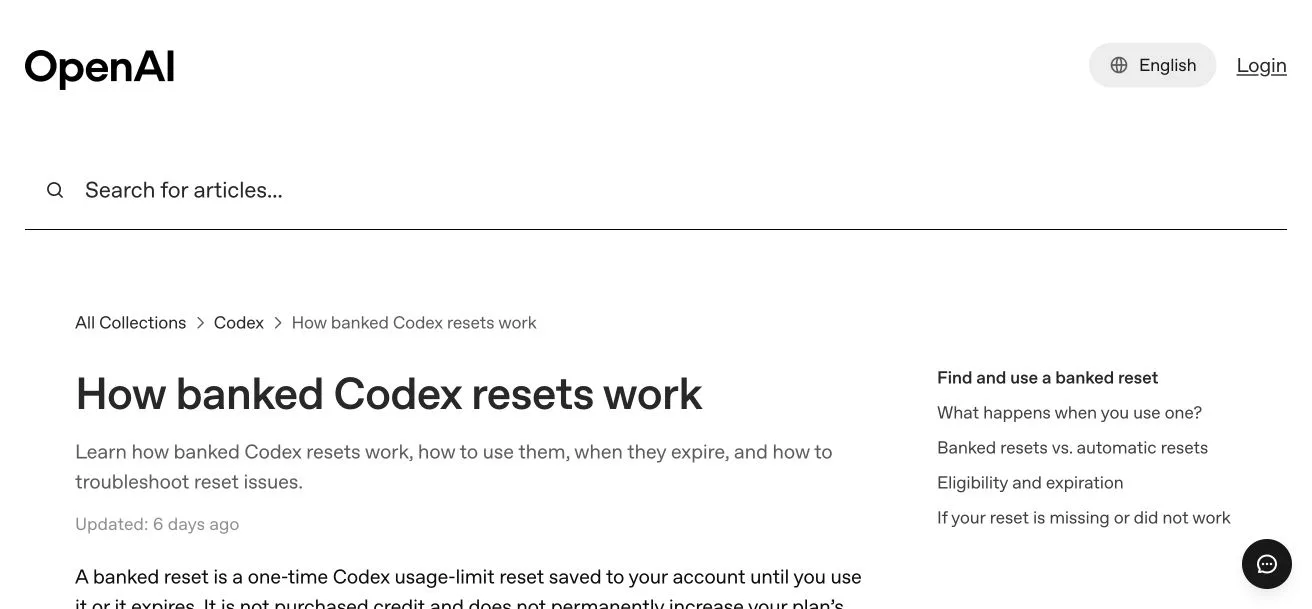
OpenAI documents banked usage resets for Codex as one-time boosts outside the normal weekly cycle. They are separate benefits, and unused weekly allowance does not automatically roll over week to week.
An OpenAI community notice also records paid-plan resets. Treat these as dated benefits, not proof of a permanent upward capacity trend.
The sourced comparison is narrower than a platform verdict: OpenAI documents extra one-time resets, while independent outlets report a lower forthcoming Claude Code tier.
Codex vs Claude: Capacity Snapshot for Q4
| Factor | Codex (OpenAI) | Claude Code (Anthropic) |
|---|---|---|
| What the cited evidence establishes | OpenAI documents one-time banked resets that are not automatic rollover | Independent outlets report a 17% change; the first-party clarification is unavailable |
| Responsible planning assumption | Measure the normal weekly allowance separately from promotional resets | Treat the reported change as conditional until it appears in the account or first-party documentation |
What This Means for Your Q4 Automation Budget
Q4 is the highest-demand quarter for most B2B businesses. It is when you run end-of-year client campaigns, close pipeline, plan for the year ahead, and push as much work as possible into automated systems so December does not collapse into chaos.
If the reported Claude Code limit change takes effect, a fixed weekly budget would accommodate roughly 17% less throughput under the reported baseline comparison. Measure your own task volume before reprioritizing work.
A reported 17% reduction sounds modest, but the operational impact depends on task mix and model usage. If your current weekly budget completes 60 comparable deliverables, a 17% throughput reduction would imply about 50—not a guarantee, but a planning scenario to test against your logs.
The cited OpenAI evidence is narrower: it documents dated, one-time banked Codex resets, not a higher permanent baseline or a durable capacity trend. For Q4 planning, measure your normal weekly allowance separately from any promotional reset.
Which Tool Fits Which Situation
| Situation | Better fit |
|---|---|
| Running high-volume autonomous agent tasks in Q4 | Test both against your real workload; the cited capacity evidence alone does not choose a winner |
| You have existing Claude Code workflows and switching costs are high | Stay on Claude Code, but audit your weekly task budget |
| You want the platform with the larger normal weekly allowance | Compare the limits visible in your accounts; do not count one-time resets as the baseline |
| Your team is already inside ChatGPT Work for other tasks | Consolidate into Codex to avoid managing two agent limits |
| You want to test which agent runs your specific workflow better | Run both in parallel for two weeks, measure outputs, then consolidate |
| Your workflows are primarily long-document or creative tasks | Either works; evaluate on output quality, not capacity alone |
Action Steps Before September 14
Independent coverage says the Claude Code change is scheduled for September 14. Use the remaining time to measure, not to assume.
- Audit your current weekly Claude Code usage. Pull the last three weeks of task logs and identify which workflows use the most capacity. Those are the ones most exposed if the reported lower ceiling appears.
- Identify which tasks are portable to Codex. Any task that runs through a connector Codex also supports (Gmail, Google Drive, Slack, Google Calendar, Notion, HubSpot) can be moved without rebuilding from scratch.
- Measure your highest-volume batch tasks before September 14. If the reported baselines are accurate, the reference level moves from 150 to 125. Record your actual completed work now so you can verify the change instead of planning from a headline.
- Set up Codex if you have not yet. If your current agent stack is entirely inside Claude Code, this is a good forcing function to add Codex as a second rail. You do not have to choose one. Running both gives you a combined capacity floor that neither alone provides.
- Check the current official plan pages on both tools. Capacity and pricing change. Compare the limits visible in your own account before upgrading.
Bottom Line
Treat the independently reported Claude Code limit change as a planning signal rather than a confirmed crisis. The reported permanent tier remains above the reported May baseline, but the first-party clarification is unavailable for verification.
If the reported Claude Code change occurs, it lands heading into a high-demand quarter. OpenAI's documented one-time resets point in the other direction, but they are promotional boosts rather than a guaranteed permanent baseline.
For business owners running meaningful agent workflows in Q4, the practical answer is: keep both tools available, measure each weekly ceiling on your own workload, and route high-volume tasks from observed capacity rather than a vendor-comparison headline.
If you have not set up Codex yet, the setup guide is a good starting point. If you are already on Codex and want to add agent tasks that currently live inside Claude Code, the connector list is largely the same. Most workflows transfer cleanly.
FAQ
Is the Claude Code limit cut permanent?
Independent coverage describes the summer boost as temporary and the 25% increase over the May baseline as permanent. Without the first-party clarification, this article cannot verify the duration or whether another bonus layer will appear.
Does this affect Claude the chat assistant, not just Claude Code?
The independent reports discussed here describe Claude Code. This article does not establish a change to the standard Claude conversation product.
Can I buy extra Claude Code capacity to offset the cut?
This article did not locate a first-party Anthropic top-up announcement. Check the current plan and billing pages inside your account before assuming that an upgrade or add-on exists.
Why are the reported percentages different?
Independent coverage uses two reference points: a reported May baseline of 100 and a reported temporary level of 150. Under that reporting, 125 is 25% above the former and roughly 17% below the latter. The first-party clarification remains unavailable.
Will Codex ever cut limits the same way?
There is no cited public plan here for a Codex cut. OpenAI's help page documents one-time banked resets, while independent coverage reports the Claude Code change. Neither is a permanent capacity guarantee.